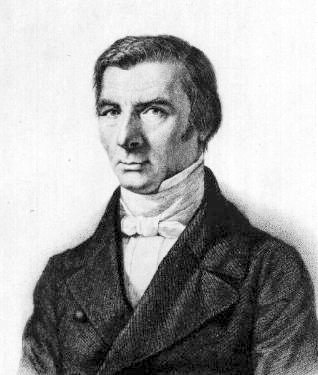
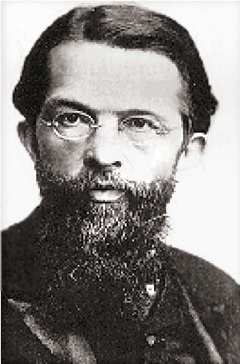
Moritz J. Bonn: A Classical Liberal Voice in a Collectivist World

By Richard Ebeling

Originally published in the February 2021 Edition of Future of Freedom

Ninety years ago, the United States and most of the rest of the Western industrial world was in the throes of the Great Depression. Usually demarcated as having begun with the U.S. stock market crash of October 1929, the Depression is most often dated as having reached bottom at the end of 1932 and the early part of 1933.

Unemployment, as measured by the government, reached more than 25 percent of the American labor force; Gross National Product declined by 54 percent. Wholesale prices in the U.S. declined between 1929 and 1933 by 23 percent, while farm prices, alone, went down by 52 percent over the same period. It is not surprising that, given the falls in prices, that the aggregate money supply had contracted by 30 percent during the Great Depression, and more than 8,000 banks closed their doors.

The Great Depression was unique in anyone’s living memory in terms of its severity and duration. While not to the same extent as in the United States, similar decreases in output and rising unemployment, accompanied by declining prices, were experienced in many of the leading European economies, with Germany being next in severity after America.

Coming only a little more than ten years after the disaster and destruction of the First World War, which ended in 1918 after four years of deadly conflict, the leading questions of the day in the 1930s were why and how did this economic collapse come about, and, equally if not more important, what needed to be done to escape from the maelstrom of massive harm to hundreds of millions of ordinary people?

Collectivist dreams of central planning triumphant

Collectivists of many stripes were sure that their day had come. The communist government in Soviet Russia was hailing the end of capitalism and the dawn of socialist revolutions everywhere for humanity’s salvation through a “dictatorship of the proletariat” and central planning. The fascist government in Italy insisted that the Depression showed the bankruptcy of classical liberalism and laissez faire, with the need for the nationalist “totalitarian” state — Mussolini had coined the term — that imposed its own form of corporatist central planning on society for the good of the people as a whole.

In January 1933, Adolf Hitler and his National Socialist (Nazi) Party came to power in Germany, determined to use concentrated, dictatorial power to restore the German people in all their “racial purity” to great power status, with its all being made possible through government spending on grandiose public works, (at first) clandestine military rearmament, and the Nazis’ own version of central planning by subordinating all of German business to the will and commands of the National Socialist leadership. If Stalin had ordered a Soviet five-year central-planning system beginning in 1928, after 1936 the Nazis imposed their own four-year central-planning system on the German people.

It was widely presumed by many that “capitalism” was the cause of the world’s economic disorder and human misery. Governments everywhere were, if not centrally planning as in Soviet Russia, fascist Italy, and Nazi Germany, then imposing regulations and restrictions, prohibitions and protections, deficit spending, and “jobs” programs. Franklin Roosevelt’s New Deal agenda implemented versions of all of them at one time and to one degree or another, including the fascist variation on the central-planning theme.

Political intervention as the base for the Great Depression’s severity

Few were the voices who spoke out against this political and ideological trend. Those who did saw the dilemma that the Western world was in to be due, precisely, to the abandonment of a truly liberal, free-market order. The Great Depression and its magnitude were caused by the forms and degrees to which governments intervened and preempted the normal operation and rebalancing of competitive markets that could have and would have restored economic coordination and “full employment” in a relatively short period of time.

One such classical liberal, free- market–oriented voice, now almost forgotten, yet highly respected and fairly well known at the time, was the German economist Moritz J. Bonn. For instance, just ninety years ago, on April 29, 1931, he delivered the annual Richard Cobden Memorial Lecture in London, England, entitled “The World Crisis and the Teaching of the Manchester School.” He pointed out that the 19th-century ideal of a limited government devoted to securing the personal liberty and economic freedom of each citizen had been replaced in Western democracies by the idea of increasingly unlimited government under which “majorities of all sorts have learned long ago to use their control over Governments as a handy means of dividing the national dividend for their own sectional purposes.”

Democratized plunder and privilege had become the order of the day. In such a setting, each special-interest group attempts to use political means to restrict competition at home through regulations and limit foreign rivals through tariffs or import quotas. Taxing had become a method for redistributing income and wealth to those able to sway government policies in their direction at the expense of those in voting minority status in the electoral process. That meant that markets were prevented from coordinating supply and demand, and government interventions created imbalances, distortions, and wage and price rigidities that left those countries in persistent economic disarray.

Government interventions made normal economic recovery impossible

As Bonn summarized it,

The free play of economic forces has been replaced everywhere, at least in part, by private monopoly or by government monopoly, by tariffs and by all sorts of price control, from wage fixing by arbitration boards, to valorization by farm boards…. There is intervention now on a big scale, based on forecasting and bent on planning, and there is a crisis much bigger than any crisis the world has seen so far….

The prevalence of manipulation has made the passing of the crisis far more difficult than did the state of affairs which corresponded to the principles of the [free-trade] Manchester School. In those days a crisis cured itself in the long run by the fall of prices, being from one commodity to the other, including labor as well as capital….

The chances of getting over the crisis in this way today are very remote. For in the present situation of the world, half of its institutions are manipulated whilst the other half are supposed to be free. The prices subject to the play of free competition, have fallen all over the world…. Other prices have remained fairly rigid. They are maintained by economic and political coercion, by combines of labor and capital, supported by tariffs and other manipulatory legislation…. If selected prices and sheltered wages can be maintained whilst all other prices are declining, a new satisfactory level cannot be attained…. The conflict between the free play of economic forces and the manipulation of Governments and monopolies is the main cause of the long continuation of the crisis.

Moritz went on to argue in an article that he wrote later in 1931 for The Bankers Magazine entitled “Some Causes and Some Problems of the Present Crisis” that those who proposed monetary expansion and government budget deficits as the “cure” for the Great Depression failed to fully appreciate that only a real rebalancing of markets, through appropriate relative price and wage and production adjustments, could bring sustainable full employment. All monetary inflation would do was threaten a new series of distortions, because the inescapable deleterious effects from any monetary expansion is that they affect different prices and wages in different ways at different times that throw the pattern of relative prices and the uses of labor and capital in misdirected and unsustainable directions, which becomes visible once an inflation comes to an end.

Moritz J. Bonn, the wandering scholar

Moritz Julius Bonn was born in Frankfurt, Germany, in June 1873. He earned his PhD in economics from the University of Munich in 1892; before completing his degree, he spent a term at the University of Vienna studying with Carl Menger, the founder of the Austrian school of economics, and another term at the University of Freiberg as a student under the famous sociologist and historian Max Weber. He traveled widely in Europe and the United States both before and after the First World War, and in 1930 published The American Adventure, offering an insightful analysis of American culture and society in the 1920s.

Appointed the rector of a Berlin university in 1931, he was removed from that position by the Nazis in early 1933, because he was both Jewish and an influential classical liberal. His dismissal caused an uproar in the British and American press because of his public reputation as an expert on European and U.S. economic policy and political affairs. Fortunately, he was offered a teaching position at the London School of Economics, which he held until 1938, when he moved to the United States. He held various visiting professorships at American universities until he returned to England in 1948, where he lived until his death in 1965.

His autobiography, Wandering Scholar (1949), which, among many other insights and interpretations of the places he traveled to over the decades, contains his recollections of how disastrous was the great German hyperinflation that finally led to virtual economic ruin for the entire country in 1923. In it, also, are shown the various statist trends of the late nineteenth and early twentieth centuries that led to the political and economic catastrophes of the First World War and the interwar period of the 1920s and 1930s that culminated in the Second World War.

The cultural value of capitalist profit-making

Throughout this period Bonn was often a great debunker of myths and fallacies about the supposed evils of capitalism. For instance, in 1931, he wrote in a German newspaper “Capitalism and Literature.” Critics of the market economy charged capitalism for the poor taste and topics of mass publications, whether books or magazines. In the pursuit of profits, businessmen foster the worst in people through increasing sales by pushing cheap detective stories and low-class sensationalism.

He reminded his readers that since the beginning of time, people have wanted their everyday amusements and playful ways. Profits are made by giving people what they want. Bonn asked, “Is capitalist mass production guilty of bad taste or is it bad taste that makes the mass production of bad books possible?” Through mass production at increasingly lower costs, books and magazines reflecting a wide diversity of likes and desires are made available to people that previously had not been the case.

Critics of capitalism forget that many books of a more serious and specialized scholarly type would never have been possible and available in relatively inexpensive editions for those interested in reading them, if not for the market economy. And many of the most popular authors of the time could never have had wide readerships if not for private-enterprise publishing. As Bonn puts it, “If a Bavarian chambermaid is able to give a friend a cheap copy of [John] Galsworthy’s [Forsyte Saga] for Christmas” is that not better than when such a thing was impossible, before capitalist publishing?

Bonn also responded to those who accused capitalism of making everything standardized and monotonously the same, just to produce things cheaply in large numbers to earn mass profits. Contrary to this misguided criticism, said Bonn,

Capitalism, in so far as it is real capitalism, is eager for novelty. In an economically planned and thoroughly organized communal life, no Ford automobile would have been invented, not because socialism could not have made an invention but because it would not have wanted to. Bolshevism will be able to cast aspersions on the capitalist world only so long as it can borrow capitalist ideas…. Its bureaucracy, once it has triumphed, would never tolerate the unauthorized development of the inventions of genius….

A world in which every individual has the same absolutely standardized private bathroom is a more individualistic world than one in which there are no private bathrooms at all, but only a great socialist tank. Is it more far-sighted to destroy the private bathrooms because not everyone yet enjoys one?

Anti-market cartels and the medieval imposed just price

Another myth that Bonn attempted to challenge was the notion that the problems of monopoly and price fixing by coalitions of large enterprises in the form of cartels were part of a free-market system. In his article “Medieval Economic Theory in Modern Business Life” (1929), he argued that what had arisen out of the wartime circumstances was a belief that every market price should cover its costs of production plus a fair and reasonable margin of profit; that had been part of the policy implemented by belligerent governments in the form of price controls, especially in Imperial Germany during the First World War, to entice manufacturers to produce the goods and services needed for the military as well as for the civilian population on the home front.

This mindset was reinforced, Bonn explained, by the experience of the great German hyperinflation of the early 1920s. What seemed as a profit-earning price when some finished consumer good was brought to market and sold often was shown to be a loss when the inflation-driven costs of the factors of production had the result that those earned profits were not enough to repeat the manufacturing process, since input prices were found to be increasing more than the just-earned output price from previous production. As Bonn put it, “Notwithstanding huge paper profits, trade as a whole and the banks as well lost most of their capital.”

What German businessmen and bureaucrats came to see as the rational ideal was stable or rising prices through government regulations, subsidies, protections, and supports that guaranteed profit margins. Free markets could not be trusted to ensure an earned net return over production expenses. “So the comfortable creed of falling prices being beneficial to mankind was replaced by the belief that rising prices by giving a [government] stimulus to production, are the true engines of social progress…. The conception at the bottom of this theory of stabilization of prices … is closely related to the medieval view of maintaining a given social order and a fixed individual income…. This can only be justified,” argued Bonn, “on the medieval theory of the ‘just price’; that the price paid by the consumer must compensate the producer for his actual outlay and the cost of his customary standard of living, to which he is entitled.”

And since such “just price” profit-margin guarantees cannot be certain on an open and free market, less-productive and more-inefficient producers turned to those in political power to ensure them of that which they could not always gain in the competitive arena. Hence, the long-established rationale for government-mandated and -supported cartels in Germany, which had already begun in the late nineteenth century. The profit-and-loss system was essential for economic betterment and market coordination, said Bonn:

I am inclined to think that as a method of industrial progress the weeding out of backward concerns by competition, leading to substantial writing down of overcapitalized plants, is a more efficient method than … cartelized industries…. I am convinced that real economic progress in a capitalist world is impossible without ever-recurring writing off, and I see in the [government-supported] cartels a well-thought-out system of maintaining inflated capital values.

Liberal free trade brought prosperity and peace

Moritz Bonn was also fiercely opposed to political and economic nationalism. He railed against the imposition of trade barriers and other forms of restrictions on the free movement of goods, capital, and people. With the coming of the Great Depression, all the major countries of the world attempted to protect their domestic markets from foreign competition. That intensified nationalistic resentments, angers, and government-policy plots to undermine the protectionist trade walls of other nations while safeguarding their own.

In “International Economic Interdependence” (1934), Bonn reminded his readers that the older pre–World War I system of relatively open freedom of trade not only increased material and cultural well-being for all participants but helped maintain a world of peace. Said Bonn,

Whenever the spirit of liberalism has prevailed in the economic sphere, international cooperation worked fairly well notwithstanding political nationalistic frictions…. Wherever international economic exchange was operated in its [liberal] spirit, international economic interdependence made for peace in the political field and for the reduction of friction in the economic field…. International interdependence of this sort was real cooperation. It raised the standard of living in all the countries concerned. It drew them together economically, and in doing so, made political friction far less likely

European imperialism and the rebirth of political paternalism

At the same time, he was no apologist for the global empires of countries such as Great Britain or France. Imperialism required a dangerous contradiction between the ideas and policies of the Western imperial powers at home and those followed abroad. Great Britain and France hailed themselves as nations grounded in the principles of personal freedom, self-government, and parliamentary democracy. It was presumed that every person should be considered to have an inherent right to his individual liberty and to freely determine and participate in the political system under which he lived.

But in conquering vast areas of the Earth and imposing without the consent of the subjugated peoples the political authority of those ruling over them in a faraway imperial capital, they were denying the very justification of their own domestic systems of government. Bonn explained this in a published series of lectures, The Crisis of European Democracy (1925):

But from a political point of view the populations of the colonial territories inhabited by colored peoples were subject races, whose consent to the rule of their white masters had never been asked for. They did not participate in the shaping of any policy affecting their fates.

Thus, a curious antithesis arose: As parliamentary institutions based on the principles of government conference were spreading slowly all over Europe, government by force was gaining ground afresh in all the territories newly acquired…. The authority for using force emanated in many cases from the same bodies — the parliamentary governments of the world — whose own existence was based on the denial of force, as a method of government

What was a central part of the rationale for these subject colonial peoples to be governed without their consent? That they had not developed the cultural and political prerequisites for self-rule, and needed to be tutored in those matters by their imperial masters before they could be fully free citizens. But Bonn said that this reawakened ideology of political paternalism by imperial force easily could be brought home to the imperial country’s own population:

If the colored races were fit subjects for an autocratic, though, benevolent, form of government, because they had not yet developed the capacity of governing themselves, it might be assumed without much questioning that there were large masses of people at home whose economic and intellectual status had not given them much chance to prove their fitness for self-government…. The acquisition and the developing of colonies thus gave a new strength to the old established theories of government by force.

This was a theme that he developed further in his later book, The Crumbling of Empire (1938). The practice and mindset of empire, he argued, served as part of the entrée into the twentieth century’s rationales for dictatorship in some European countries and welfare states in others. Say to a man that he does not know his own true interests or lacks the intelligence to fully make his own decisions, and it is not a far step in politics to conclude that peaceful persuasion needs to be replaced with paternalism by force.

Moritz J. Bonn was one of those classical-liberal voices of the twentieth century who understood how and why the world had turned away from its earlier roots in a philosophy, a politics, and an economics of freedom. He, like others from those middle decades of the last century, still has something of value to say and share with us. We should not allow them to be completely forgotten.
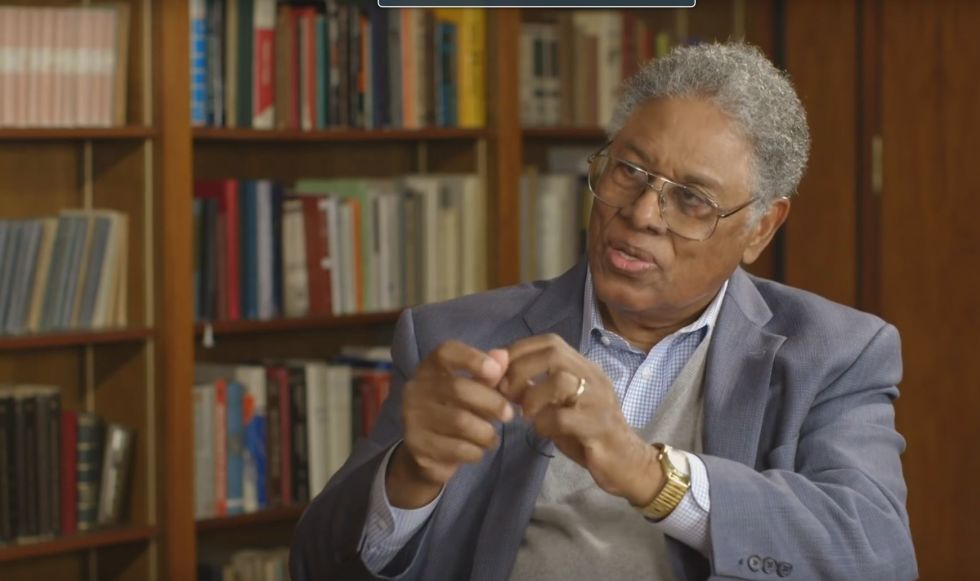
Preferential Policies: An International Perspective by Thomas Sowell

By Richard Ebeling

Originally published on July 9, 2022 for Capitalism Magazine

Regardless of the reason or rationale, the social effect of affirmative-action policies is to politicize social relationships. And the consequences of this have been everything from systems of privilege and corruption to mob violence and civil war.

America was founded upon the idea that it is the individual who possesses rights. This was counter to the political order that dominated in the rest of the world. Practically everywhere else, it was accident of birth that determined one’s “privileges.” Group membership was the criterion that specified what one deserved from others and owed to them. And these were debts and obligations that were set for life.

The individualist philosophy of America has been under attack — but from within. The old world philosophy of privilege and status has found new adherents in the advocates of affirmative-action programs in the United States. The individual’s place and relative income position in society are now to be determined by the ethnic group to which he belongs as well as that group’s politically determined “fair share” to jobs, education and monetary reward.

Thomas Sowell is one of the best and most prolific free market economists alive today. A good portion of his efforts have been devoted to debunking the myths surrounding racial relationships in economics and politics. His latest book, Preferential Policies: An International Perspective, is a frontal assault on the rationales for, and the evidence supporting, the ideology of affirmative action.

Crucial to the entire affirmative action argument is the assumption that in a nondiscriminatory world, individuals of different ethnic groups would be evenly distributed in each and every profession and occupation. Based on this starting assumption, the affirmative-action advocates then jump to the conclusion that any under-representation of an ethnic group in an occupation, relative to that group’s numbers in the surrounding community, is proof of racial discrimination.

Sowell demonstrates that this assumption has absolutely no basis in fact in any society. Indeed, the opposite is more the norm around the world. Because of culture, history and value systems transmitted between generations of different groups, in every society it is usually the case that there occurs group-clustering in various activities in an economy. This is an anthropological and sociological fact that has nothing to do, per se, with race or racism.

He argues that to claim that any numerical over- or under-representation of an ethnic group in an occupation is “proof” of discrimination is as absurd as to look at the same data and conclude that the disproportionalities are due to “genes.” Furthermore, many of the reasons for these occupational disproportionalities are only understandable in terms of various qualitative factors that are at work — historical and cultural factors that cannot be reduced to a quantitative and statistical massaging of the facts.

Affirmative-action policies, Sowell explains, have existed for centuries all over the world. They arise from resentment and envy, from beliefs of superiority and fears of inferiority. They sometimes have been meant to protect majorities from successful minorities; at other times to protect stagnant minorities from industrious majorities. But regardless of the reason or rationale, their social effect is to politicize social relationships. And the consequences from this have been everything from systems of privilege and corruption to mob violence and civil war.

Sowell asks us to remember that many roads to hell have been paved with good intentions. And that the questions we should ask about such policy proposals are: What kind of incentives do affirmative-action policies create in the society, and for whom? How do such policies modify the institutional processes within which people make decisions and choices?

When affirmative-action policies are looked at in terms of these questions, they have not only failed to attain the ends for which they were designed, but they have often been counter-productive, harming many of the very people the interventions were meant to assist.

Often proposed as a temporary measure to compensate for past wrongs done to a group, affirmative-action laws, once in place, take on a permanent life of their own. Those who receive benefits from these policies have incentives to maintain their privileges. And once one group is bestowed with such preferential treatment, there soon arise many other groups claiming that what one group deserves is their “right” as well.

Those who must answer to the affirmative-action police for hiring practices have incentives to choose employees, not on the basis of qualification, but on whether they belong to the “correct” group and in the appropriate numbers. This leads to resentment and anger on the part of those who might have been the ones getting the job or receiving the promotion — if it hadn’t been for “them” and their special political pull. And it creates psychological doubts among the recipients about whether they are holding their positions merely because they met a needed ethnic quota on the job. Sowell argues that these are costs too high to pay just so that some in the political and economic arenas can gain privileges for themselves at the expense of both freedom and real opportunity for the less fortunate. One can only hope his analysis and conclusions can help turn a very dangerous tide in our society — before it’s too late.

The Centenary of Ludwig von Mises’s Critique of Socialism

By Richard Ebeling

Originally published on June 7, 2022 for The Future of Freedom Foundation

At a banquet dinner held in New York City on March 7, 1956, honoring the famous Austrian economist Ludwig von Mises, another equally renowned member of the Austrian school of economics, Friedrich A. Hayek, delivered a talk highlighting the important contributions of his long-time mentor and close friend, going back to when they first met in the Vienna of the early 1920s.

Hayek pointed out the significance of Mises’s 1912 book, The Theory of Money and Credit, with its development of what became known as the “Austrian” theory of money and the business cycle. But Hayek wanted to emphasize to those attending the dinner the real importance of another of Mises’s books, one that appeared ten years later in 1922. This was Die Gemeinwirtschaft, or in its English-language title, Socialism: An Economic and Sociological Analysis. This work, Hayek said, made “the most profound impression on my generation … for our generation it must remain the most memorable and decisive production of Professor Mises’s career.” Hayek continued:

It was a work on political economy in the tradition of the great moral philosophers, a Montesquieu or Adam Smith, containing both acute knowledge and profound wisdom…. To none of us young men who read the book when it appeared was the world ever the same. If [Wilhelm] Röpke stood here, or [Lionel] Robbins, or [Bertil] Ohlin (to mention only those exactly the same age as myself), they would tell you the same story. Not that we at once swallowed it. For it was too strong a medicine and too bitter a pill…. And though we might try to resist, even strive hard to get the disquieting considerations out of our system, we did not succeed. The logic of the argument was inexorable.

It was not easy. Professor Mises’s teaching seemed directed against all we had been brought up to believe. It was a time when all the fashionable arguments seemed pointed to socialism and when nearly all “good men” among the intellectuals were socialists…. For all the young idealists of the time, it meant dashing of all their hopes.

Mises’s challenge of central planning

It is now 100 years since the first (German-language) edition of Mises’s Socialism appeared in print in 1922. It is a century in which socialism-in-practice has been experienced in a wide variety of countries around the world. But when the volume was published in 1922, the First World War had been over for only less than four years. The Bolshevik revolutionaries in Russia under Vladimir Lenin had only recently triumphed over their anti-communist opponents in a bloody civil war that ended the year before. It was still several years away, in 1929, when Lenin’s successor, Joseph Stalin, would end all remaining private enterprise in Soviet Russia and introduce comprehensive five-year socialist central planning.

Therefore, when Mises’s Socialism first appeared, its relevancy could hardly be questioned, but it still seemed “academic,” that is, still a theoretical critique of whether or not a socialist economic system could be an effective and superior alternative to the “capitalist order,” whose days seemed inevitably numbered. Socialism, as Hayek remarked, was the fashionable “wave of the future” for many of the opinion-influencing intellectuals around the world.

Even so, when it first appeared, it almost immediately caused a firestorm of controversy in the German-speaking world. Here was a book that challenged virtually all the premises, presumptions, and prophecies about the beautiful and better world that was awaiting mankind with the coming of the socialist utopia. An end to production for private profit would lead to material prosperity for all. The elimination of “wage slavery” and worker exploitation at the hands of capitalist employers would mean the arrival of “economic equality” and “social justice.” Wars for the benefit of capitalist arms manufacturers would be a thing of the past, and international peace will have, finally and permanently, arrived. All human relationships would be transformed into altruistic associations of “other-orientedness” with the demise self-interest and possessive greed and selfishness caused by private ownership. Finally, mankind will have entered a heaven-on-earth.

The heart of Mises’s argument was that a socialist centrally planned economy was institutionally unable to effectively and “rationally” function in any way equal or superior to a competitive market economy. Hence, the socialist promise of material standards of life far better than under capitalism was “impossible.”

Private property, competition, and prices

This part of his critique of socialism had been published two years earlier, in 1920, as an article in a German-language scholarly journal under the title, “Economic Calculation in the Socialist Commonwealth.” Mises asked a simple but profound question. Once a socialist regime has come to power, successfully nationalized all of the means of production, and established a system of central planning, how would the central planners know what to do?

How would they know which goods and services to produce in terms of the actual wants of the members of this new socialist society? How would the central planners decide how to do the producing in terms of technologies chosen and the relative types and amounts of scarce resources (land, labor, and capital) to employ in one line of production rather than some other? What would be the economic benchmarks or bases by which the central planners would know they had produced the right goods, in the right amounts, with the most cost-efficient use of the means of production under their control to ensure that the best outcomes prevailed with the least economic waste?

In a functioning, free-market economy, all such questions are answered and solved through the competition of supply and demand and the resulting price system. In the marketplace, consumers are able to inform and convey information to producers what it is they want, and how intensively, by expressing their demand for things through the prices they are willing to pay for final goods and services they are interested in buying. Producers inform consumers what they would be willing to produce and at what prices they might be able to bring quantities of goods and services to market.

At the same time, private enterprisers and entrepreneurs interested in undertaking the production of various goods must compete with each other for employment and use of the scarce means of production that could be potentially employed in different ways making different goods. Their rival bids for purchasing or hiring those means of production, in turn, generate the prices for the factors of production: wages for labor, rent for the use of land, prices to purchase capital (machines, tools, equipment), and interest to borrow other people’s savings for investment projects of many different types and for different lengths of time.

Thus, out of these competitive bids and offers and rivalries on both the demand and supply sides of the market, there emerges the structure of relative prices for outputs and inputs. Those private enterprisers and entrepreneurs can now compare the possible price at which a finished good, if manufactured, might sell for at some point in the future after a production process had been undertaken, with the prices that would have to be paid to employ the needed land, labor, capital, and resources during the production process.

A rational and reasonable decision then could be made as to whether any particular good in question could be produced with a certain combination of the needed inputs and result in a profit (monetary revenues greater than monetary costs) or a loss (monetary revenues less than monetary costs). The profit-oriented self-interest of private enterprisers and entrepreneurs would always tend to make sure that the goods being produced, with particular combinations of resources, were those for which consumer demand justified the costs to bring them to market.

Abolishing the institutions for economic rationality

The impracticability of a socialist system of central planning was that it did away with the institutional prerequisites that are essential for economic rationality: private property in the means of production, a competitive market process for the emergence of a functioning price system, and a stable medium of exchange — money — on the basis of which those inputs and outputs could be compared to determine profit or loss.

But, Mises argued, under socialism, the means of production cannot be (legally) bought and sold, since they are under the monopoly ownership and control of the socialist government. With nothing to legally buy and sell, there are no competitive bids and offers for the means of production. With no bids and offers, there is no marketplace leading to agreed-upon terms of trade. With no agreed-upon terms of trade, there are no market-generated prices. And without market-based prices for both consumer goods and the means of production, there is no successful and rational way to determine profit and loss within the economic system.

As a result, Mises argued, rather than an economic horn-of-plenty in terms of all the goods people really want, in the quantities actually desired, and produced in a way that uses the means of production in the most cost-rational way, what results is a system of, as Mises called it much later on, “planned chaos.” Here went all the socialist hopes and dreams of an alternative social order that would produce more and better goods than in a competitive market economy.

Mises’s 1920 critique on the unworkability of a socialist economic order became the centerpiece of his 1922 volume on Socialism. For decades to follow, indeed, until the collapse of the Soviet Union in 1991, socialists and others denied or ignored Mises’s arguments. Or they attempted to propose forms of what became known as “market socialism,” under which government managers of state-owned enterprises would be assigned to act “as if” they were capitalists using prices imposed by the central planning agency to decide what to produce and in what particular ways.

Socialism versus classical liberalism 

But Socialism is more than just an economic critique of the unworkability of socialist central planning, however profound and timeless this core part of the book was and remains. What Ludwig von Mises offered was an entire critical analysis of the very idea of a socialist system, from the widest philosophical, social, historical, and ideological perspectives. When Hayek referred to the breath of the book being more in the tradition of eighteenth-century Enlightenment figures like Montesquieu or Adam Smith, he was not exaggerating.

At the same time, the volume is a statement and defense of the classical-liberal worldview of individual freedom, the free society, the competitive market order, and the ideal of a global community of men based on human dignity and liberty, voluntary association, and world peace and prosperity. At every turn, as Mises explains the nature and dangers from the establishment of a socialist system, it is juxtaposed with the alternative vision and virtues of free-market liberalism for a truly tranquil and harmonious world.

To begin with, political and economic liberalism reflected humanity’s escape from its long historical existence under conquest, slavery, politically imposed status, and numerous forms of tyranny and despotism. Under emergent liberalism, human relationships, slowly but surely, were transformed into those of contract under which individual association was based on voluntary consent and mutual benefit.

The human being changed from an “object” to be used and abused in the service of others, under the use or threat of political force, into a distinct human being possessing individual rights, deserving respect and dignity from others. The master-and-servant relationship became one of citizens in a free society possessing equality of rights under an impartial rule of law.

Mises emphasized this change in the human condition by highlighting how liberalism had changed the status of women in society. For ages, women were the property of fathers and husbands, expected to obey, and controlled in all they were allowed to do. But with the growing economic liberty of free-market capitalism, women increasingly were recognized as independent human beings possessing the same equal rights as men and free to direct their own lives as they chose in the arena of private property rights, inheritance, contract, and nearly all aspects of decision-making.

Socialist central planning and political tyranny

Any form of socialism entailed a reversal or narrowing of these classical-liberal triumphs in human life. Government nationalizing of private property and the imposing of central planning meant that the individual was now at the mercy and dictates of those planning the socialist society. The government would assign work, determine how and where people lived, and distribute the centrally planned output based on a political determination of what members of the socialist society deserved and “needed.” Mises summarized all this:

The Socialist Community is a great authoritarian association in which orders are issued and obeyed. This is what is implied by the words “planned economy” and the abolition of the [free market] anarchy of production…. It follows that men become the mere pawns of official action….

Socialist society is a society of officials. The way of living prevailing in it, and the mode of thinking of its members are determined by this fact…. Socialism knows no freedom in occupation. Everyone has to do what he is told and go to where he is sent…. Officialdom is extended to the sphere of the spirit. Those who do not please the holders of power are not allowed to paint or to sculpt or to conduct an orchestra. Their works are not printed or performed….

The nationalization of intellectual life, which must be attempted under Socialism, must make all intellectual progress impossible…. No censor, no emperor, no pope, has ever possessed the power to suppress intellectual freedom which would be possessed in a socialist community.

Has there been any instance of a system of socialism-in-practice with comprehensive central planning over the last 100 years that has not borne out Ludwig von Mises’s explanation and warnings of what was likely to happen when “capitalism” is overthrown and the control over the economic affairs of any society is transferred to those who then hold in their hands the destiny of all those under their power?

Have not socialist societies all been giant prisons of tyranny, torture, terror, and mass murder against all those identified and marked as “enemies” or “opponents” or “wreckers” of the Central Plan? Socialism-in-practice has left a global graveyard of well over 100 million victims — innocent, unarmed men, women, and children — on the road to Utopia.

Classical liberalism and world trade

In addition, Mises explained that economic liberalism has helped to foster a worldwide community of peace and prosperity. Over the last 200 years, as political barriers and prohibitions were lowered or abolished, boundary lines between countries became less and less important. Market interactions increasingly became private affairs between consumers and producers, demanders and suppliers bound together in an international web of economic interdependency arising from specialization and division of labor. In place of bombs and bullets dividing and destroying human beings, a bountifulness of peaceful and productive freedom of trade connected more and more members of the human race.

Said Mises: “For Liberalism the problem of the frontiers of the state does not arise. If the functions of the state are limited to the protection of life and property against murder and theft, it is no longer of any account to whom this or that land belongs.” People, capital, and goods freely move to where economic opportunity and personal preference finds it most attractive and desirous. As Mises reinforced:

The greater productivity of work under the division of labor is a unifying influence. It leads men to regard each other as comrades in a joint struggle for welfare, rather than as competitors in a struggle for existence. It makes friends out of enemies, peace out of war, society out of individuals.

This was no fantasy. Before the First World War in 1914, a peaceful and prosperous global community was well toward becoming a reality to the extent to which free-trade liberal principles were mostly practiced among the then-leading
nations of the world. But this
was shattered by the First World War as belligerent nations sealed themselves off from their wartime enemies through renewed protectionism, passports and visas, and centralized planning and systems of wage and price controls — all in the name of “winning the war” by governments across the battle lines. All the nations at war, in other words, introduced “war socialism.” Accompanying this came restrictions on personal freedom, civil liberties, and lost privacy as virtually anything became subject to government surveillance.

Socialism and conflict

In the aftermath of the war’s end in 1918, all the socialist projects ended up being forms of “national socialism,” that is, socialism within individual countries. Mises argued that this not only made citizens of any such socialist state the economic and social captive of their own government, for if systems of fairly comprehensive socialist central planning were to be established in a growing number of countries, it would also mean the end to a peaceful and mutually beneficial international order.

Each centrally planned country would limit imports and exports to what the respective national central planning authorities decided was good and desirable. Foreign investment, now being “affairs of state,” would be dictated and determined by politics rather than by private and peaceful pursuit of profit in the service of global consumer demand. The benefits of international division of labor would be lost. Wars between socialist countries would become a new danger, as one centrally planned society attempted to forcibly obtain needed or desired goods or resources from another centrally planned society that refused to exchange in pursuit of its own domestic planning purposes and targets.

Socialism, therefore, means the demise of the economic and social unity of the world, replaced by national socialist planners potentially sealing off one country from another, with interactions and trade limited to and confined within the
determinations of those same planners. The individual becomes a captive of his own nation’s central planners, who determine how and what types of relationships he will be allowed to have with any and all of the other peoples around the world.

Liberty versus socialism

In a book of over 500 pages, Mises also dissects the various religious and secular ethics that had been used to rationalize and justify a collectivist system replacing a society of free individuals respected and secure in their rights, each peacefully pursuing their own personal purposes and ends. He debunks the centuries-old presumption that individuals following their own goals come into conflict with some presumed higher social or national or collective good. He explains that there is no “social good” independent of and separate from the ends and purposes of the respective individual members of a society. The free market harmonizes the peaceful pursuits of each individual with the purposes and activities of all others.

Toward the end of Socialism, Ludwig von Mises called all friends of freedom to the intellectual battlefront:

Everyone carries a part of society on his shoulders; no one is relieved of his share of responsibility by others. And no one can find a safe way out for himself if society is sweeping towards destruction. Therefore everyone, in his own interests, must thrust himself vigorously into the intellectual battle. None can stand aside with unconcern; the interests of everyone hang on the result. Whether he chooses or not, every man is drawn into the great historical struggle [between liberalism and socialism], the decisive battle into which our epoch has plunged us.

Mises was not unaware of how difficult is the task to oppose and defeat collectivism and socialism. In the preface that he wrote for the 1932 second edition of Socialism, Mises said that generations may have to pass for classical liberalism’s victory, and it was for future generations that he had written this book:

I know only too well how hopeless it seems to convince impassioned supporters of the Socialist Idea by logical demonstration that their views are preposterous and absurd. I know too well that they do not want to hear, to see, or above all to think, and that they are open to no argument. But new generations grow up with clear eyes and open minds. And they will approach things from a disinterested, unprejudiced standpoint, they will weigh and examine, will think and act with forethought. It is for them that this book is written.

So, 100 years after Ludwig von Mises’s Socialism was first published, it was written with you in mind, today. You are the future generation that Mises hoped for.

Ludwig von Mises’s Free Market Agenda for a Postwar Ukraine

By Richard Ebeling

Originally published on March 10, 2022 for the American Institute for Economic Research

Whether at least part of Ukraine survives as a free and independent country when this war ends, or whether that will have to wait until some time in the future, Ukrainians will have to plan for the reconstruction of their economy at some point in the future. The economic policy agenda for such a reconstruction is at least partly at hand, and can be found in the writings of the Austrian economist, Ludwig von Mises.

Our television screens and social media sites are filled with the images of death and destruction as the Russian army continues its devastating advance into Ukraine. How long this will go on, and with what human and material costs is still not known. But for the Ukrainian people and their country’s economy, the world is, truly, being turned upside down.

Before the Russian invasion of Ukraine on February 24, 2022, the Ukrainian economy was performing fairly well by a variety of official statistics. Price inflation had been declining modestly from nearly 11 percent in the middle of 2021 to an annual rate of 10 percent in January 2022. The rate of monetary expansion had been accelerating through most of 2021, but in January 2022, all the Ukrainian money supply measurements had modestly decreased compared to December 2021, suggesting possible diminished monetary pressures on prices.

Ukrainian Gross Domestic Product (GDP) had grown in the last quarter of 2021 at an annualized rate of nearly 6 percent, and was expected to grow at a reasonably good clip through 2022. The Ukrainian-Russian crisis of 2014 had resulted in Russia’s annexation of Crimea and the breaking away of parts of eastern Ukraine by Russian-supported separatists. The Ukrainian government’s deficit spending to cover military and other expenditures pushed the government debt to GDP ratio from 40 percent in 2013 to nearly 81 percent in 2016. But by the end of 2020, the debt to GDP ratio had declined to less than 61 percent, for a 25 percent decline over four years.

However, the Ukrainian government’s budget deficit in 2020 had equaled 6.1 percent of GDP compared to 1.9 percent in 2018 and 2.1 percent in 2019. And the government’s red ink had significantly continued in 2021. So even if this new war had not interfered, the government debt burden was likely to grow. With growing budget deficits to finance, the government would possibly have turned, again, to the Ukrainian central bank for the money to cover its expenditures in excess of taxes. This would have threatened to reverse the modest deceleration in price inflation.

Ukraine’s Uncertain Political and Economic Future

All of this has now been thrown out of the budgetary window with the war. Will there even be an independent Ukraine at the end of 2022? If it does exist, will it be a really independent country or a puppet state doing the bidding of Vladimir Putin? Will the territory of Ukraine be within the internationally recognized borders before the Russian attack, or will eastern parts of the country be cut off as permanent separate “people’s republics,” or be out-and-out annexed by Russia, as happened with Crimea in 2014?

By the time the military phase of the conflict comes to an end, how much physical destruction will have occurred as a constraint on postwar production and reconstruction? How many Ukrainians will have been killed or seriously injured or disappeared from the Ukrainian labor force due to the likelihood of millions of people going into prolonged or permanent exile in other parts of Europe and the world?

What will be the trade and investment climate and possibilities in a postwar Ukraine, again assuming it continues to exist as some type of separate country, real or puppet? A good part of the answer to this last question will depend on the extent and nature of American and European Union sanctions that remain imposed on Russia, and on whatever remains of Ukraine, if it’s anything other than a vassal state obedient to Moscow.

Will the people of a conquered Ukraine resign themselves to their Russian-determined fate and try to go about everyday life in the new circumstances? Or will there be an extended underground of resistance and sabotage? For several years following the end of the Second World War in 1945, groups of Ukrainian partisans continued armed resistance against the Soviet Union in the forests of western Ukraine. Will that type of determined resistance manifest again?

If a puppet regime is imposed in Kyiv, Ukraine’s economic future for a significant period of time will be determined by the degree to which Western sanctions are kept in place. The country’s economic prospects will be confined within the limited options and narrower opportunities as a vassal state within the political and economic orbit of Putin’s Russia.

Ukraine as Europe’s Submerged Nation in the Soviet Union

The worst scenario for the country and its people would be a repeat of what occurred in the aftermath of the First World War. After centuries under the rule of, especially, Imperial Russia and Austria-Hungary, Ukrainian nationalists declared their nation’s independence, like many other ethnic and linguistic groups were doing in central and eastern Europe in 1918 and 1919. But the Ukrainians, due to internal divisions, could not withstand the attacks of the conflicting armies of a reconstituted Poland trying to recreate a “greater Poland,” and Lenin’s Bolshevik forces overrunning parts of Ukraine while defeating the remnants of the anti-communist Russian military units.

The final outcome, after a peace treaty between Poland and Soviet Russia in 1921, was that the western part of the Ukrainian lands, including the city of Lviv, came under Polish control; the other two-thirds of the country, containing the capital city of Kyiv, fell under Soviet power. From 1921 to 1991, Ukraine remained a “submerged nation,” which under Soviet control suffered the death of millions of innocent men, women and children during Stalin’s forced collectivization of the land in the early 1930s. The Ukrainians suffered even more destruction in the Second World War, first from the invading German army in 1941-1943, and then with the return of Stalin’s rule at the end of the war in 1944-1945.

With the end of the Soviet Union in 1991, Ukraine declared its independence. For the last thirty years, the country has experienced the dream that has been dreamed by many Ukrainians for centuries: being an independent nation-state. But, now, Putin’s Russia threatens to remove Ukraine, again, from the political map of the world, as happened in 1921 at the hands of Lenin and his Soviet government.

Ukraine’s Prewar Imperfect Political System

Independent Ukraine has not been a model of a perfectly functioning political democracy, nor has the government always respected the civil liberties of every citizen. Corruption has abounded. Privileges and favors to various individuals and interest groups have been freely meted out. Fiscal mismanagement has always been present, and price inflation has sometimes been high and erratic due to the Ukrainian central bank’s willingness to turn the handle of the monetary printing press to finance the government’s spending needs.

But whatever the political imperfections, economic regulatory hurdles, and monetary and fiscal abuses, freedoms of the press, speech, religion, and association have been fairly reasonably practiced in recent years. On the Freedom House’s index for overall respect for political rights and civil liberties in countries around the world, Ukraine got 61 percent out of a hundred. Not close to Germany’s 94 percent, or the UK’s 93 percent or even Poland’s 81 percent, among some other European countries. But Ukraine appeared to be a shining example of a politically free society compared to, say, Russia with a score of 19 percent out of a hundred, or Belarus with only 8 percent.

Ludwig von Mises’s Gold Standard Proposal for Ukraine

Whether at least part of Ukraine survives as a free and independent country when this war ends, or whether that will have to wait until some time in the future, Ukrainians will have to plan for the reconstruction of their economy at some point in the future. The economic policy agenda for such a reconstruction is at least partly at hand, and can be found in the writings of the Austrian economist, Ludwig von Mises.

Mises, interestingly, was born in Lviv in 1881, when it was then known as Lemberg in the old Austro-Hungarian Empire. He served as an artillery officer in the Austrian Army during World War I, seeing action on the eastern front against the Russians. After Lenin’s Bolshevik government signed a separate peace with Imperial Germany and Austria-Hungary in February 1918, Mises was sent to the part of Ukraine that fell under Austrian occupation. He was assigned as officer in charge of currency control, with his headquarters in Odessa. Mises served there for most of the spring of 1918, until he was ordered back to Vienna as an economic expert with the Austrian general staff until the end of the war in November 1918.

In the summer of 1918, shortly after returning to Vienna, Mises prepared a policy paper offering “Remarks Concerning the Establishment of a Ukrainian Note-Issuing Bank.” It was an outline of the institutional rules to be followed by a Ukrainian central bank under a gold standard. (In Selected Writings of Ludwig von Mises, Vol. 2, pp. 23-29)

All bank notes issued and outstanding, Mises said, should be at all times covered with gold reserves or foreign exchange redeemable on gold to one-third of the bank’s liabilities. Bank assets in the form of secure, short-term loans should back the remaining two-thirds of the notes in circulation. Mises admitted that there might be particular historical and institutional circumstances that would have to be taken into consideration in setting the conditions under which certain types of borrowers might have access to the lending facilities of the Ukrainian central bank. But what was crucial for Ukraine to have a sound monetary system were ample gold reserves for redemption on demand; also essential were limits on the term structure of loans made by the central bank to make sure it was always, ultimately, able to meet its obligations to maintain a functioning gold standard.

Establishing a gold standard in Ukraine, or anywhere else in the world today seems highly unlikely. Governments value too highly their ability to access fiat money for their deficit-covering purposes, and for central banks to have the means by which to try to influence borrowing, spending, and employment through monetary and interest rate manipulations. But Mises’s central point was that unless there are institutional rules and checks on a central bank to prevent it from arbitrarily changing the quantity of money and credit in the economy, the danger of serious price inflation and the booms and busts of the business cycle will always be present.

Mises’s Economic Agenda for Postwar Reconstruction

An outline of a Ukrainian postwar agenda for economic reconstruction is to be found in a series of monographs, essays, and lectures that Mises delivered in the early 1940s after his escape to America from war-torn Europe in 1940. Much of Europe was being destroyed in the conflict between Nazi Germany and the Allied powers. When the war was finally over, the task of rebuilding a broken Europe would be immense. (See, Selected Writings of Ludwig von Mises, Vol. 3: “The Political Economy of International Reform and Reconstruction”.)

To successfully rebuild Europe, the postwar world would have to be one of work, saving, and investment to, first, rebuild all that was gone, and then to build on that for a more prosperous life than had prevailed before the outbreak of the war in 1939. Or as Mises, expressed it, “It is the duty of honest economists to repeat again and again that, after the destruction and the waste of a period of war, nothing else can lead society back to prosperity than the old recipe – produce more and consume less.” Mises went on:

The distinctive mark of a sound economic policy is that it aims at the establishment of a durable system resulting in a continuous improvement of the nation’s wellbeing. There can hardly be imagined a worse principle of government than that of the short-run policies of the last decades . . . A policy that, indifferent about tomorrow, strives after ephemeral success and carelessly sacrifices the future is not progressive but parasitic . . .

“There is but one means to improve the economic wellbeing of a whole nation and each of its individual citizens: The progressive accumulation of capital. The greater the amount of capital available, the greater the marginal productivity of labor and, therefore, the higher the wage rates. A sound economic policy is a policy that encourages savings and investment and thereby the improvement of technical methods of production and the productivity of labor.

The Need for Secure Property Rights and Entrepreneurship

Mises argued that fundamental to a peaceful and prosperous future was a change in ideas away from various forms of collectivism and political paternalism to “an ideology that could lead us to a perfect free market economy.” Property rights need to be recognized, secured, and protected against not only private plunderers but, more importantly, against the confiscating and regulating hands of government.

This was essential not only to induce the domestic incentives for work, saving, investment and entrepreneurial creativity, but also to create the domestic institutional confidence to successfully attract and secure both direct foreign private investors and financial lenders from abroad. Only in this way could a war-recovering country – like Ukraine will be – accelerate reconstruction and increase production and productivity, so as to not be dependent only on the possibilities from domestic savings and scarce resources in that postwar environment.

There has to be both a respect for and the free market latitude given to entrepreneurs and the entrepreneurial spirit out of which arises progress and prosperity. As Mises said, looking over the wreckage left by the war in Europe, “If there is any hope for a new upswing it rests with the initiative of individuals . . . The entrepreneurs will have to rebuild what the governments and the politicians have destroyed.”

Ending the Politics of Envy and Economics of Redistribution

This also means, Mises said, that the politics of envy and government redistribution must be put aside. Who shall be left to be taxed in any “tax the rich and subsidize the poor” scheme in a setting in which war has made practically everyone a “have-not, when the focus of economic policy should be to foster capital formation, not wealth redistribution.” In the type of postwar setting in which Ukraine will find itself, Mises’s words remain no less true today: “There is no other recipe than this: Produce more and better, and save more and more.”

Taxes need to be low, predictable, and non-disincentivizing. Property rights need to be secure, protected, and free from the intervening and regulating hand of government. A politics of envy and political pandering to special interest groups has to be set aside, so profit-seeking, market-directed entrepreneurs can be confident and at liberty to peacefully and productively go about the work of producing what consumers want and investing in more, new, and better capital to raise the standards of living of all over the longer run.

Trade between nations needs to be free and unrestricted so all might benefit from gains from specialization in a global system of division of labor. The doors of Europe have been thrown open to Ukrainian refugees in the generous and charitable spirit of offering shelter and safety to those escaping from Putin’s dreams of “making Russia great again.” When the shock and sorrow die down, there should be no fear of a free movement of people, alongside a free movement of goods and capital. Hands, just like money and commodities, move where they can be most profitably and productively employed to the long-run betterment of all, everywhere. This, too, was part of Mises’s program for international peace and prosperity.

The Need for a Radical Change in Ideas to Economic Liberty

According to Mises,

“What ranks above all else for economic and political reconstruction is a radical change in ideologies. Economic prosperity is not so much a material problem; it is, first of all, an intellectual and moral problem.”

Putin’s foreign policy of conquest, or Ukraine’s pre-war domestic politics of corruption and favoritism, or America’s political economy of seemingly unending budget deficits and growing debt, are the practical outcomes of an ideology of plunder. The idea is that taking is superior to exchanging; that coercing is better than reasoning and persuading; and that forced association is as moral as relationships based on voluntary agreement. It is the immorality of force versus the ethics of liberty.

War dramatically brings out the difference between these two opposing conceptions of social life. Out of this conflict and at some time in the future, Ukrainians will have to not only rebuild their country, but decide which of these two ideologies will be the foundation for their country’s future. The better one would be Ludwig von Mises’s proposed ideology of a “perfect free market economy.”

Böhm-Bawerk: Austrian Economist Who Said No to Big Government

By Richard Ebeling for the Mises Institute

We live at a time when politicians and bureaucrats only know one public policy: more and bigger government. Yet, there was a time when even those who served in government defended limited and smaller government. One of the greatest of these died over one hundred years ago on August 27, 1914, the Austrian economist Eugen von Böhm-Bawerk.

Böhm-Bawerk is most famous as one of the leading critics of Marxism and socialism in the years before the First World War. He is equally famous as one of the developers of “marginal utility” theory as the basis of showing the logic and workings of the competitive market price system.

But he also served three times as the finance minister of the old Austro-Hungarian Empire, during which he staunchly fought for lower government spending and taxing, balanced budgets, and a sound monetary system based on the gold standard.

Danger of Out-of-Control Government Spending

Even after Böhm-Bawerk had left public office he continued to warn of the dangers of uncontrolled government spending and borrowing as the road to ruin in his native Austria-Hungary, and in words that ring as true today as when he wrote them a century ago.

In January 1914, just a little more than a half a year before the start of the First World War, Böhm-Bawerk said in a series of articles in one of the most prominent Vienna newspapers that the Austrian government was following a policy of fiscal irresponsibility. During the preceding three years, government expenditures had increased by 60 percent, and for each of these years the government’s deficit had equaled approximately 15 percent of total spending.

The reason, Böhm-Bawerk said, was that the Austrian parliament and government were enveloped in a spider’s web of special-interest politics. Made up of a large number of different linguistic and national groups, the Austro-Hungarian Empire was being corrupted through abuse of the democratic process, with each interest group using the political system to gain privileges and favors at the expense of others.

Böhm-Bawerk explained:

We have seen innumerable variations of the vexing game of trying to generate political contentment through material concessions. If formerly the Parliaments were the guardians of thrift, they are today far more like its sworn enemies.

Nowadays the political and nationalist parties … are in the habit of cultivating a greed of all kinds of benefits for their co-nationals or constituencies that they regard as a veritable duty, and should the political situation be correspondingly favorable, that is to say correspondingly unfavorable for the Government, then political pressure will produce what is wanted. Often enough, though, because of the carefully calculated rivalry and jealousy between parties, what has been granted to one [group] has also to be conceded to others—from a single costly concession springs a whole bundle of costly concessions.

He accused the Austrian government of having “squandered amidst our good fortune [of economic prosperity] everything, but everything, down to the last penny, that could be grabbed by tightening the tax-screw and anticipating future sources of income to the upper limit” by borrowing in the present at the expense of the future.

For some time, he said, “a very large number of our public authorities have been living beyond their means.” Such a fiscal policy, Böhm-Bawerk feared, was threatening the long-run financial stability and soundness of the entire country.

Eight months later, in August 1914, Austria-Hungary and the rest of Europe stumbled into the cataclysm that became World War I. And far more than merely the finances of the Austro-Hungarian Empire were in ruins when that war ended four years later, since the Empire itself disappeared from the map of Europe.

A Man of Honesty and Integrity

Eugen von Böhm-Bawerk was born on February 12, 1851 in Brno, capital of the Austrian province of Moravia (now the eastern portion of the Czech Republic). He died on August 27, 1914, at the age of 63, just as the First World War was beginning.

Ten years after Böhm-Bawerk’s death, one of his students, the Austrian economist Ludwig von Mises, wrote a memorial essay about his teacher. Mises said:

Eugen von Böhm-Bawerk will remain unforgettable to all who have known him. The students who were fortunate enough to be members of his seminar [at the University of Vienna] will never lose what they have gained from the contact with this great mind. To the politicians who have come into contact with the statesman, his extreme honesty, selflessness and dedication to duty will forever remain a shining example.

And no citizen of this country [Austria] should ever forget the last Austrian minister offinance who, in spite of all obstacles, was seriously trying to maintain order of the public finances and to prevent the approaching financial catastrophe. Even when all those who have been personally close to Böhm-Bawerk will have left this life, his scientific work will continue to live and bear fruit.

Another of Böhm-Bawerk’s students, Joseph A. Schumpeter, spoke in the same glowing terms of his teacher, saying, “he was not only one of the most brilliant figures in the scientific life of his time, but also an example of that rarest of statesmen, a great minister of finance…. As a public servant, he stood up to the most difficult and thankless task of politics, the task of defending sound financial principles.”

The scientific contributions to which both Mises and Schumpeter referred were Böhm-Bawerk’s writings on what has become known as the Austrian theory of capital and interest, and his equally insightful formulation of the Austrian theory of value and price.

The Austrian Theory of Subjective Value

The Austrian school of economics began 1871 with the publication of Carl Menger’s Principles of Economics. In this work, Menger challenged the fundamental premises of the classical economists, from Adam Smith through David Ricardo to John Stuart Mill. Menger argued that the labor theory of value was flawed in presuming that the value of goods was determined by the relative quantities of labor that had been expended in their manufacture.

Instead, Menger formulated a subjective theory of value, reasoning that value originates in the mind of an evaluator. The value of means reflects the value of the ends they might enable the evaluator to obtain. Labor, therefore, like raw materials and other resources, derives value from the value of the goods it can produce. From this starting point Menger outlined a theory of the value of goods and factors of production, and a theory of the limits of exchange and the formation of prices.

Böhm-Bawerk and his future brother-in-law and also later-to-be-famous contributor to the Austrian school, Friedrich von Wieser, came across Menger’s book shortly after its publication. Both immediately saw the significance of the new subjective approach for the development of economic theory.

In the mid-1870s, Böhm-Bawerk entered the Austrian civil service, soon rising in rank in the Ministry of Finance working on reforming the Austrian tax system. But in 1880, with Menger’s assistance, Böhm-Bawerk was appointed a professor at the University of Innsbruck, a position he held until 1889.

Böhm-Bawerk’s Writings on Value and Price

During this period he wrote the two books that were to establish his reputation as one of the leading economists of his time, Capital and Interest, vol. I, History and Critique of Interest Theories (1884), and vol. II, Positive Theory of Capital (1889). A third volume, Further Essays on Capital and Interest, appeared in 1914 shortly before his death.

In the first volume of Capital and Interest, Böhm-Bawerk presented a wide and detailed critical study of theories of the origin of and basis for interest from the ancient world to his own time. But it was in the second work, in which he offered a Positive Theory of Capital, that Böhm-Bawerk’s major contribution to the body of Austrian economics may be found. In the middle of the volume is a 135-page digression in which he presents a refined statement of the Austrian subjective theory of value and price. He develops in meticulous detail the theory of marginal utility, showing the logic of how individuals come to evaluate and weigh alternatives among which they may choose and the process that leads to decisions to select certain preferred combinations guided by the marginal principle. And he shows how the same concept of marginal utility explains the origin and significance of cost and the assigned valuations to the factors of production.

In the section on price formation, Böhm-Bawerk develops a theory of how the subjective valuations of buyers and sellers create incentives for the parties on both sides of the market to initiate pricing bids and offers. He explains how the logic of price creation by the market participants also determines the range in which any market-clearing, or equilibrium, price must finally settle, given the maximum demand prices and the minimum supply prices, respectively, of the competing buyers and sellers.

Capital and Time Investment as the Sources of Prosperity

It is impossible to do full justice to Böhm-Bawerk’s theory of capital and interest. But in the barest of outlines, he argued that for man to attain his various desired ends he must discover the causal processes through which labor and resources at his disposal may be used for his purposes. Central to this discovery process is the insight that often the most effective path to a desired goal is through “roundabout” methods of production. A man will be able to catch more fish in a shorter amount of time if he first devotes the time to constructing a fishing net out of vines, hollowing out a tree trunk as a canoe, and carving a tree branch into a paddle.

Greater productivity will often be forthcoming in the future if the individual is willing to undertake, therefore, a certain “period of production,” during which resources and labor are set to work to manufacture the capital—the fishing net, canoe, and paddle—that is then employed to paddle out into the lagoon where larger and more fish may be available.

But the time involved to undertake and implement these more roundabout methods of production involve a cost. The individual must be willing to forgo (often less productive) production activities in the more immediate future (wading into the lagoon using a tree branch as a spear) because that labor and those resources are tied up in a more time-consuming method of production, the more productive results from which will only be forthcoming later.

Interest on a Loan Reflects the Value of Time

This led Böhm-Bawerk to his theory of interest. Obviously, individuals evaluating the production possibilities just discussed must weigh ends available sooner versus other (perhaps more productive) ends that might be obtainable later. As a rule, Böhm-Bawerk argued, individuals prefer goods sooner rather than later.

Each individual places a premium on goods available in the present and discounts to some degree goods that can only be achieved further in the future. Since individuals have different premiums and discounts (time-preferences), there are potential mutual gains from trade. That is the source of the rate of interest: it is the price of trading consumption and production goods across time.

Böhm-Bawerk Refutes Marx’s Critique of Capitalism

One of Böhm-Bawerk’s most important applications of his theory was the refutation of the Marxian exploitation theory that employers make profits by depriving workers of the full value of what their labor produces. He presented his critique of Marx’s theory in the first volume of Capital and Interest and in a long essay originally published in 1896 on the “Unresolved Contradictions in the Marxian Economic System.” In essence, Böhm-Bawerk argued that Marx had confused interest with profit. In the long run no profits can continue to be earned in a competitive market because entrepreneurs will bid up the prices of factors of production and compete down the prices of consumer goods.

But all production takes time. If that period is of any significant length, the workers must be able to sustain themselves until the product is ready for sale. If they are unwilling or unable to sustain themselves, someone else must advance the money (wages) to enable them to consume in the meantime.

This, Böhm-Bawerk explained, is what the capitalist does. He saves, forgoing consumption or other uses of his wealth, and those savings are the source of the workers’ wages during the production process. What Marx called the capitalists’ “exploitative profits” Böhm-Bawerk showed to be the implicit interest payment for advancing money to workers during the time-consuming, roundabout processes of production.

Defending Fiscal Restraint in the Austrian Finance Ministry

In 1889, Böhm-Bawerk was called back from the academic world to the Austrian Ministry of Finance, where he worked on reforming the systems of direct and indirect taxation. He was promoted to head of the tax department in 1891. A year later he was vice president of the national commission that proposed putting Austria-Hungary on a gold standard as a means of establishing a sound monetary system free from direct government manipulation of the monetary printing press.

Three times he served as minister of finance, briefly in 1895, again in 1896–1897, and then from 1900 to 1904. During the last four-year term Böhm-Bawerk demonstrated his commitment to fiscal conservatism, with government spending and taxing kept strictly under control.

However, Ernest von Koerber, the Austrian prime minister in whose government Böhm-Bawerk served, devised a grandiose and vastly expensive public works scheme in the name of economic development. An extensive network of railway lines and canals were to be constructed to connect various parts of the Austro-Hungarian Empire—subsidizing in the process a wide variety of special-interest groups in what today would be described as a “stimulus” program for supposed “jobs-creation.”

Böhm-Bawerk tirelessly fought against what he considered fiscal extravagance that would require higher taxes and greater debt when there was no persuasive evidence that the industrial benefits would justify the expense. At Council of Ministers meetings Böhm-Bawerk even boldly argued against spending proposals presented by the Austrian Emperor, Franz Josef, who presided over the sessions.

When finally he resigned from the Ministry of Finance in October 1904, Böhm-Bawerk had succeeded in preventing most of Prime Minister Koerber’s giant spending project. But he chose to step down because of what he considered to be corrupt financial “irregularities” in the defense budget of the Austrian military.

However, Böhm-Bawerk’s 1914 articles on government finance indicate that the wave of government spending he had battled so hard against broke through once he was no longer there to fight it.

Political Control or Economic Law

A few months after his passing, in December 1914, his last essay appeared in print, a lengthy piece on “Control or Economic Law?” He explained that various interest groups in society, most especially trade unions, suffer from a false conception that through their use or the threat of force, they are able to raise wages permanently above the market’s estimate of the value of various types of labor.

Arbitrarily setting wages and prices higher than what employers and buyers think labor and goods are worth—such as with a government-mandated minimum wage law—merely prices some labor and goods out of the market.

Furthermore, when unions impose high nonmarket wages on the employers in an industry, the unions succeed only in temporarily eating into the employers’ profit margins and creating the incentive for those employers to leave that sector of the economy and take with them those workers’ jobs.

What makes the real wages of workers rise in the long run, Böhm-Bawerk argued, was capital formation and investment in those more roundabout methods of production that increase the productivity of workers and therefore make their labor services more valuable in the long run, while also increasing the quantity of goods and services they can buy with their market wages.

To his last, Eugen von Böhm-Bawerk defended reason and the logic of the market against the emotional appeals and faulty reasoning of those who wished to use power and the government to acquire from others what they could not obtain through free competition. His contributions to economic theory and economic policy show him as one of the greatest economists of all time, as well as his example as a principled man of uncompromising integrity who in the political arena unswervingly fought for the free market and limited government.

Adam Smith, Father of Capitalism

Adam Smith (1723-1790) is a world-renowned Scottish thinker known for his work in philosophy and economics during the Scottish Enlightenment in the 18th century. His seminal 1776 work, Wealth of Nations , is considered to be the first work in modern economics and played a key role in Smith eventually being considered both the “Father of Economics” and the “Father of Capitalism.”

Smith was born in a small town outside Edinburgh in Scotland. Little is known about his early life but Smith began attending university at age 14, studying philosophy. Smith furthered his philosophical studies at the University of Glasgow and at Balliol College in Oxford, England before beginning his teaching career in the late 1740’s. During his schooling, Smith developed passions for free speech and the nature of liberty amongst other things. 

In 1750, Smith met David Hume, a leading philosophical thinker of the day and one of Smith’s inspirations growing up. The two became friends and scholarly peers and worked closely to develop philosophical and economic ideas throughout the Scottish Enlightenment. 

For the next 15 years, Smith taught at the University of Edinburgh or was touring Europe, giving lectures and working on his first book, The Theory of Moral Sentiments (1759). The published work was a huge success and attracted students from all over Europe to attend Smith’s lectures. It was here that Smith largely transitioned to what he is most known for – his ideas on free market capitalism. 

His popular lectures led him to begin his second book and the magnum opus of his life, Wealth of Nations, which took a decade from inception to publication. The book was hugely successful, selling out almost immediately. And rightfully so.

Smith’s 1776 work lays the basic groundwork for so many modern capitalistic practices. In it, he coined the phrases “invisible hand”, “absolute advantage”, and “division of labor”, three of the most fundamental pillars of modern laissez-faire economics. 

Smith notes that individuals are guided by their own self-interest and as a result, actually benefit society as the fundamental idea of supply and demand leads to the most efficient outcome economically. Smith goes on to further this notion by explaining this efficiency as a “general equilibrium”, arguing that this equilibrium that occurs when the “invisible hand” guides the markets is most beneficial when there is little government interference or regulation. 

Smith adds that furthering the division of labor promotes increased levels of productivity as well as emboldened innovation. He also examined mercantilism, criticizing the system for failing to recognize absolute advantage and therefore, failing to exercise free trade. 

Smith’s career and works were truly revolutionary and his legacy as a free-market economist has transcended generations, laying the groundwork for much of what economists are still taught today. 

In Wealth of Nations, Smith writes on the benefits of freedom in a society, stating, “[Without trade restrictions] the obvious and simple system of natural liberty establishes itself of its own accord. Every man…is left perfectly free to pursue his own interest in his own way…The sovereign is completely discharged from a duty [for which] no human wisdom or knowledge could ever be sufficient; the duty of superintending the industry of private people, and of directing it towards the employments most suitable to the interest of society.” 

Sources:

Wikipedia entry

Britannica biography

Adam Smith Institute

Austrian School of Economics, Ahead of Their Time

The Austrian School of Economics was not really a school at all but rather, a group of 19th century Austrian and German thinkers that developed many of the most fundamental ideals associated with classical economics. Founded by Carl Menger in 1871, the Austrian School is known to have shaped other key figures in the classical economics school of thought including Ludwig Von Mises, Friedrich Hayek and Friedrich Von Weiser.

Much of the Austrian School’s ideals extend from a single key principle: the importance of the individual. The individual’s choices and actions, based on the knowledge they have, are far more revealing in the world of economic phenomena than the actions of the collective. Individuals make decisions that are in their own best interest and they also value things differently. As a result, economists should study and theorize with this assumption at the forefront of their understanding. 

Over the course of history, members of the school are some of the original theorists to envision and expand upon ideas like opportunity cost, marginal utility, and the Economic Calculation Problem

In the late 1800’s, Von Weiser formulated the idea of opportunity cost, pointing out that understanding the value of an individual’s second best option would allow for a better understanding of scarcity and resource allocation. Later, Von Mises and Hayek became critical of Marxian socialism when they partook in understanding the economic calculation problem, the idea that central planners are almost always incapable of effectively allocating the factors of production in the most efficient manner. Von Mises also theorized about a nation’s business cycle, noting that government manipulation of money led to artificial booms and therefore, eventual busts.

Friedrich Hayek said, “The greatest success of a school is that it stops existing because its fundamental teachings have become parts of the general body of commonly accepted thought.” For achieving this and making huge strides in economic theory, the Austrian School is recognized as an honorable proponent of free societies and free markets, alike. 

Sources:

Wikipedia entry

Investopedia

EconLib

Britannica

Friedrich Hayek, Nobel Laureate

Friedrich Hayek at Nobel ceremony

Friedrich Hayek (1899–1992) was a philosopher and economist born in Austria-Hungary at the turn of the nineteenth century. Part of the esteemed Austrian School, Hayek became well-known around the world for his defense and encouragement of classical liberalism. In 1974, Hayek was awarded a shared Nobel Memorial Prize in Economic Sciences for his work in fiscal theory and economic fluctuations, examining how social and institutional variables impact markets. 

After being raised by a family of scholars and professors in his early years, Hayek became interested in philosophy, academia, and the arts. Despite his interests however, any career ambitions would have to be put on hold when Hayek joined the Austro-Hungarian Army in 1917 to fight in the final year of World War I.

Heavily discouraged by the destruction and death he witnessed living through the war and Spanish Flu, Hayek returned to his native country to pursue an academic career, vowing to improve the political and economic processes that he believed helped contribute to the world’s recent tragedies. 

Hayek enrolled in the University of Vienna where he studied philosophy and economics. By the end of his schooling, Hayek had obtained two law doctorate’s, was taught by and worked for Ludwig Von Mises, and was heavily influenced by the works of Carl Menger

While living in London in the early 1930s, Hayek exchanged letters in a newspaper column with John Maynard Keynes, arguing that incentivizing private investment was a much better answer on the road to economic recovery than government spending programs. 

In the early 1940s, Hayek wrote what is now his most well known book, The Road to Serfdom, in which he analyzed the relationship between economic and political freedom. He goes on to warn those reading that a new despotism could come about in the name of government liberation for the greater good of society. Hayek also advocated for free markets, arguing any step towards government regulation was just the beginning on the journey towards sacrificing individual freedoms in exchange for tyrannical government control. 

Throughout the 1950s, Hayek moved to America where he was a visiting professor at the University of Arkansas and the University of Chicago. There, he led several seminars on philosophy and economics, amongst other topics. On several occasions, Hayek worked closely with Milton Friedman to form multiple academic institutions advocating for social liberty and free markets. He also published his second book entitled, The Constitution of Liberty.

Until being awarded the Nobel Memorial Prize in 1974, Hayek jumped between Germany, Austria, and California, continuing to teach and write despite suffering from various health issues and depression. Although he was surprised to receive the Nobel Award, Hayek used the opportunity to rejuvenate his career and promote his libertarian ideas to the masses. 

During his remaining years, Hayek remained a prominent figure in the conservative free-markets movement, receiving recognition from multiple institutions, and became an outspoken figure in British politics. He had several meetings with Margaret Thatcher to discuss economic policy and was also one of twelve Nobel awardees to speak with Pope John Paul II to discuss the relationship between Catholicism and the sciences in the modern world.

Hayek’s work ranges but includes topics such as the market’s business cycle, the failures of centralized economic planning, liberties being restrained for the sake of collectivism, political philosophy that promotes free societies and justice under the rule of law, and the importance of choice theory as a part of an individual’s decision making. 

Hayek died in March 1992 in Freiburg, Germany and is buried near Vienna, Austria. 

Sources:

Wikipedia entry

Encyclopedia Britannica

Mises Institute

The Nobel Prize

Foundation for Economic Education

French Economist Frédéric Bastiat

Bastiat portait

Frédéric Bastiat (1801–1850) was a French economist and member of France’s National Assembly. Bastiat is most famous for his 1850 pamphlet, The Law, but is also responsible for deriving the economic concept of ‘opportunity cost’.

Bastiat was a strong proponent of traditional economics and free markets, particularly those encouraged by Adam Smith. He is also responsible for influencing the Austrian School, a nineteenth and twentieth century school of economic thought that helped shape economists such as Ludwig Von Mises, Carl Menger and the 1974 Nobel winner, Friedrich Hayek, amongst others. 

At age nine, Bastiat became an orphan and, as he grew older, tried out many trades including commerce and farming. After inheriting family land in 1825, the young man stopped working and dove into the world of economic thought. Although none of his views are considered original, his unique and informal writing style made his ideas easy to understand and relatable in the eyes of the common man. 

The Frenchman was an outspoken critic of socialism and its advancement in French society during the nineteenth century. In The Law, Bastiat confronts ideas such as the execution of justice under the law, ‘lawful plunder,’ and the importance of liberty within a society. 

Bastiat argues that the natural rights (life, liberty, and property) are the three basic requirements of life and that “the preservation of any one of them is completely dependent upon the preservation of the other two.” He goes on to warn readers of the harmful effects of lawful plunder, the idea that the law can be perverted and then weaponized to take private property from an individual without punishment or just compensation. 

Bastiat’s other notable works include his 1848 essay, The Parable of the Broken Window, in which he first explains the concept of opportunity cost (an unforeseen cost taking place during the process of fixing the window) and the satirical “Candlemakers’ Petition” located within Economic Sophisms (1845) where he writes of a fictional group of candlemakers that attempts to lobby in order to block out the Sun, their products’ main source of unfair competition. 

Bastiat was elected to the French National Assembly in 1848 and 1849 where he continued to publicly push for free markets before dying of tuberculosis a year later at the young age of 49. Despite his short career, Bastiat’s works were highly successful at popularizing laissez-faire economics amongst the masses and much of his writing is still relevant today. 

Years after Bastiat’s death, Austrian economist and Finance Minister of German-Austria, Joseph Schumpeter, heaped praise on Bastiat, describing him as “the most brilliant economic journalist who ever lived.”

Sources:

Wikipedia entry

Text of The Law

Mises Institute 

Library of Economics and Liberty

Austrian Economist Carl Menger

Photo of Carl Menger

Austrian economist Carl Menger was a phenomenon. There are few works in the history of economics that may be truly considered “revolutionary” and “path-breaking,” in its starting premises, its logic, and its implications. But one that is in this category is Carl Menger’s Grundsätze der Volkswirtschaftsliche, his Principles of Economics in its English translation, which marks this year the 150th anniversary of its publication in 1871.

Menger’s work is often classified as one of the first formulations of the theory of marginal utility, along with the works of British economist William Stanley Jevons (1835-1882) and the Frenchman, Leon Walras (1834-1910), whose writings also appeared in the early 1870s. But Menger’s contribution also marked the beginning of a uniquely distinct “Austrian School of Economics” based on the theory of subjective value, of which he became viewed as the “founding father.”

Menger is also famous for his theory of “spontaneous order” explaining the emergence and development of social and market institutions, especially money, which may be considered an extension of the earlier contributions of some of the 18th Scottish Moral Philosophers on the same theme. In addition, he was an active participant in the Austrian government’s commission that put Austria-Hungary on the gold standard in the early 1890s, and was a critic of both socialism and extensive government intervention in economic affairs.

Carl Menger’s Background and Writings

Carl Menger was born on February 23, 1840, in the region of Galicia in the old Austrian Empire. He studied law at the universities in Prague and Vienna, earning a doctoral degree in jurisprudence at the University of Krakow. In the 1860s, he worked as a journalist for a period of time, assigned to following and analyzing the movement in commodity prices.

He noticed what seemed to be a fundamental discrepancy between the theory of prices as found in the writings of classical economists such as Adam Smith, David Ricardo, and John Stuart Mill, and the actual forces at work in bringing about the formation and the changes in prices on the market. This led Menger to rethink the theory of prices and price formation that became the basis of his Principles of Economics.

In 1872, he was appointed to a teaching position at the University of Vienna, from which he was promoted to a full professor of political economy in 1873. His other main work was Investigations into the Method of the Social Sciences, with Special Reference to Economics (1883), which caused a decades-long controversy with members of the German Historical School, due to Menger’s strong defense of the preeminent importance of “theory” in economics over the unending collection of historical data as a basis of social and economic analysis.

In 1876, Menger was appointed as a tutor in political economy to the Austrian Crown Prince, Rudolf (1858-1889), the heir to the Austrian throne. The content of what Rudolf was taught has been published as Carl Menger’s Lectures to Crown Prince Rudolf of Austria (1994). In 1878, the Crown Prince and Menger co-authored and published anonymously, The Austrian Nobility and Its Constitutional Vocation: A Warning to Aristocratic Youth. It is a scathing criticism of the decadence of the younger members of the Austrian aristocracy and the importance of “bourgeois” values in modern society. (Tragically, the Crown Prince committed suicide in 1889.)

In the 1890s, Menger’s few published works related to his participation in the Austrian commission assigned the task of formally establishing the country’s currency on a redeemable gold standard. He called for a market determination of the exchange value between the Austrian crown and a unit of gold before legally fixing the redemption rate to avoid undo dangers from both deflation and inflation.

Menger continued teaching at the University of Vienna until 1903, when he retired to continue the theoretical work begun by him in his 1871 volume. Age and decreased clarity in his mental faculties prevented his task from being completed before his death on February 26, 1921, at the age of 81. In 1923, Menger’s son, Karl Menger, Jr (1902-1985), published a slightly revised edition of the Grundsätze, with some of the additions and changes found in his father’s handwritten notes.

While Carl Menger is the founder of the Austrian School, it was through the writings of his two inspired followers, Eugen von Böhm-Bawerk (1851-1914) and Friedrich von Wieser (1851-1926), that the name and fame of “Austrian Economics” became widely known worldwide starting in the 1880s, 1890s and early years of the 20th century.

Menger’s Influence on the Austrian Intellectual Milieu

Shortly after Menger’s death in 1921, Wieser wrote a tribute to his master, and explained the intellectual milieu in which Carl Menger’s Principles of Economics appeared on the scene in 1871.

Wieser explained that back in those days, students like himself and Böhm-Bawerk did their study of economics through the law faculty at the university, and he thought this gave them a solid and sound grounding to approach and to appreciate the institutions of property, contracts, and various market institutions. But it did not provide an understanding of the workings of the market order, rather just an appreciation of its legal basis and prerequisites.

The German economics textbooks assigned were thorough in their own way, but lacked a sufficiently satisfying grounding in the logic of economic value, the emergence of prices, or the working of market competition. Plus, they were tainted by the anti-theoretical prejudices of the dominant German Historical School.

When Wieser and Böhm-Bawerk turned to the “classical economists” for such a theoretical foundation, in the writings of, say, Adam Smith and David Ricardo, they found an amazing analysis of the interactive working and coordination of market competition. But, Wieser said, they lacked a sufficiently “individualistic” approach to dig deep enough to show how out of the evaluations and actions of the individual participants of the market order there logically and empirically emerged the market process and its pricing and coordinating outcomes.

Wieser then said:

“In the midst of this distress, we found at hand Menger’s Principles, and suddenly all of our doubts were gone. Here was given to us a fixed Archimedean point, from which we found even more; we were given a full Archimedean plane, on which we were able to have a firm foundation and sufficient information to be reassured that we could proceed with confident steps.

“Menger once told me how he had come to find this solid foundation. Menger was led to his theory of [subjective] value by the way prices were made in the money market and commodity markets, on which he had to report as a young man in the [Austrian] Civil Service. He saw that the markets were led in determining these prices by facts of demand of which the prevalent theory of prices took no notice. This observation brought him to an examination of human needs and their laws.”

Menger’s Commonalities with Other Marginalist Thinkers

What Menger shared in common with the other formulators of marginal utility were the following insights:

First, value is not intrinsic to a good; it does not result simply from a quantity of labor that may have gone into a good’s production, as the classical economists had argued from the time of Adam Smith. Value is based on a human evaluation of the degree of usefulness and importance of a good under conditions of its scarcity.

Second, goods are not evaluated in terms of “classes” or categories of goods, for instance, all “water” versus all “diamonds.” Goods are evaluated in terms of discrete or “marginal” amounts of each particular good used or consumed.

Third, the marginal usefulness or importance of each unit of a particular good acquired in succession is less (or diminishes) with each additional unit used or consumed.

Strangely enough, when Menger presented his theory of the diminishing marginal usefulness of units of a good acquired and employed in his Principles, he gave no name to the concept. The term grenznutzen, or “marginal use,” was coined by Friedrich von Wieser and became translated into English and generally accepted as “marginal utility.”

Menger’s Unique and Distinct Approach to Economics

What stands out about Menger’s formulation and development of the “marginal” concept is the unique way he approached the entire subject matter of economic analysis. He grounded the analysis immediately in a clear and insistent methodological individualism. He emphasized that the method of his analysis was to reduce the complex phenomena of the social and market order to their most elementary components – individual choosing and acting men – to explain the logic of their choices and conduct in satisfying their wants, and on that foundation to then analyze the manner in which the interactions of these individual choosers and actors generate the formation and patterns of that wider and more complex social and market order.

All things, Menger continued, are subject to the laws of cause and effect, and thus to satisfy their wants individuals must discover the “laws” of causality in the world in which they live and act, including the discoverable causal connections between useful objects and things that may be utilized to serve and satisfy men’s ends.

From this Menger presented what has been a hallmark of Austrian theory ever since; that is, the idea of stages of production through planned and implemented periods of production. Some means may be found to be directly and relatively immediately useful in fulfilling desired ends, but in many if not most cases, useful things are only found to be indirectly serviceable for those ends.

Thus, for a finished loaf of bread to be available for making a sandwich, there must be an oven and other ingredients (yeast, dough, etc.) out of which the bread may be made and baked. But to have the oven and these other ingredients, iron and other raw materials must have been mined and then manufactured into a usable oven, and the dough required the farming and the harvesting of wheat, etc.

This, then, led Menger to emphasize that the existence and undertaking of such causal processes were inescapably linked to the presence and importance of time in all things that men do. Or as Menger expressed it, “The idea of causality, however, is inseparable from the idea of time. A process of change involves a beginning and a becoming, and these are only conceivable as processes in time.”

Furthermore, once we appreciate and acknowledge the omnipresence of causality and time, we must also admit the reality of uncertainty. Since time includes not only a “past” and a “present” but also a “future,” we must deal with the fact that our ideas about our wants, the efficacy of the means at our disposal and the causalities set in motion “now” for an outcome “later,” may turn out to be wrong.

There exists in all of our actions the possibility that the future may be different than we have anticipated as the experienced events unfold leading to that point on the horizon towards which actions are directed. Thus, from the beginning the Austrians highlighted the imperfection of human knowledge that makes disappointment and as well as success an ever-present and possible aspect of all that we do.

This way of thinking about and emphasizing the reality of the human decision-making circumstance also resulted in an implicit focus on what today the Austrians refer to as methodological subjectivism. That is, the insight that if we are to understand the logic and meaning in men’s actions we must appreciate how the actors themselves evaluate, interpret, and assign meanings to their own actions, the objects of the world that enter their orbit of relevance, and the actions and intentions of others with whom they may directly or indirectly interact.

Menger highlighted that in all planned acts an actor assigns meaning to some objects as useful consumer goods, and to others as indirectly useful producer goods of one type or another that are coordinated by the planner in complementary patterns of use through time-filled periods of production. These designations and causally connected production relationships do not exist or have meaning and relevance outside of a human mind giving meaning and arrangement to the things of the world in a particular way.

The Human Actor is More than a Mathematical Function

The famous Chicago School economist, Frank H. Knight (1885-1972), in his contribution on “Marginal Utility Economics” for the Encyclopedia of the Social Sciences (1931), highlighted that, “The entire theory [of marginal utility] is much more convincing in the loose, common-sense formulation of Menger than it is in the more refined mathematical version of Jevons and Walras.”

From the start, Menger did not view man as a mathematical variable reduced to mere quantitative dimensions. He presents and studies individuals in the realities of human circumstances and decisions. Thus, in his own exposition of the relationship between men’s wants and any usable means, he asks when would it matter to a person if some quantity of useful means were acquired or lost, in the context of the actor’s intentions, plans and meanings.

In fact, in 1883-1884, Menger exchanged a series of letters with his fellow “marginalist” founder, Leon Walras, who had formulated the marginal concept in the setting of mathematical general equilibrium. Menger was highly critical of viewing the essential properties of economic analysis as needing or depending upon the “mathematical” method. Said Menger to Walras:

I do not belong to the believers in the mathematical method as a way to deal with our science. I am of the opinion that mathematics is mainly a way to give an example or demonstration, but not to do the research itself . . . Mathematics is not a method for, but rather an ancillary science in, economic research . . .

“We are not investigating quantitative proportions, but, on the contrary, also the ESSENCE of economic phenomena. How shall we attain knowledge of this essence (for example, the essence of values, the essence of rent, of entrepreneurial profit, of the division of labor, etc.), by the means of mathematics? Thus, I can see much wrong with using the mathematical ‘method’ for the establishment of LAWS that govern economic phenomena . . .

“If we are to have knowledge of the laws which govern the exchange of goods, those things which stand in causal connection . . . then we must go back to the needs of men, to the importance which the satisfaction of needs have for men, to the quantities of the individual goods which are in the possession of the individual economic subjects, to the subjective importance (the subjective values) which concrete quantities of goods have for the individual subjects, etc. . . .”

Menger’s Development of Scarcity and the Marginal Concept

This explains how and why Menger proceeded to develop his version of the marginalist concept the way he did. All human activity concerns a comparison of the individual’s wants with the quantities of goods considered useful to satisfy those wants, Menger explained.

Three relationships between ends and means are conceivable: (1) The individual’s wants (ends) are greater than the available quantities of goods (means) to satisfy them; (2) his wants (ends) are equal to the available quantities of goods (means) to satisfy them; or, (3) his wants (ends) are smaller than the available quantities of goods (means) to satisfy them.

Only in the first two cases will the individual place importance and attention upon the gain or the loss of an unit of means at his disposal, since, after all, a loss of any unit of this means would entail some desired end going unfulfilled that otherwise might have been satisfied; also and especially in the first case, any additional unit of means that may come this individual’s way means an end previously unsatisfied can now possibly be fulfilled because the means were previously too insufficient to enable the satisfaction of that additional want or end.

Any good or commodity is only an “economic good,” said Menger, in those first two cases, since a loss of a unit involves an unsatisfied want, and, thus, the individual is guided to act in “economizing” ways. That is, to see that the resource or good is “husbanded” and not wasted since to suffer such a loss results in unfulfilled wants that could have been achieved with greater and more thoughtful care.

The choices that people must make occur and happen across multiple “margins” at once, since individuals are concerned with the achievement and satisfaction of more than any one want or desire. This, then, led Menger to his famous table of economizing conduct containing rows representing different wants, with under each of these wants a series of columns of marginal rankings of the importance of acquired units of goods in each of these categories of desired ends.

The individual’s logic of choice concerns, as Menger explained, in the interactive dynamics of comparing the importance of units of goods at different margins of descending significance that requires the choosing individual to both tradeoff between units of different types of goods in terms of their relative rankings in comparison to each other; and, at the same time, to do so in a way that brings about a pattern of complementary choices that “maximize” the individual’s overall satisfaction, given the scarcity of the means to attain these competing ends.

Gains from Trade, Monopoly, Competition, and Prices

With this starting point, Menger proceeds to explain the logic of the mutual benefits of trade and exchange, as individuals discover and evaluate circumstances under which the marginal importance or significance of a unit of some good in their possession is less than the marginal importance of a unit of good possessed by a potential trading partner. When the same logic is present in the mind of that other person, each will find they will be better off giving up in exchange (at the margin) what they value less highly for that which they value more highly on their personal scales of ranked importance of ends desired with possible means available.

Menger also gives a unique insight into the logic and history of how competition may be understood to emerge in markets over time. At first, as division of labor develops it is likely there is a single specializing supplier of any particular desired good, because of the small circle of potential demanders to whom that specializing seller can offer his wares.

Thus, markets usually begin with single sellers of goods – “monopolists” – given the size and extent of the market. But as markets grow with more participants and demanders for specific goods or services, it often begins to exceed the potential for one seller to continue to service and satisfy all the demands for what he has to offer.

“Monopoly, interpreted as an actual condition and not a social restriction of free competition [i.e., government prohibition on competition], is therefore as a rule, the earlier and more primitive phenomenon, and competition the phenomenon coming later in time . . .

“Every artisan who establishes himself in a locality of which there is no other person of his particular occupation, and every merchant, physician, or attorney, who settles in a locality where no one previously exercised his trade or calling, is a monopolist in a certain sense, since the goods he offers to society in trade can, at least in numerous instances, be had only from him . . .

“But if he encounters no competition and the locality flourishes, he . . . cannot always comply with the growing requirements of society for his commodities (or labor services) . . . Some [buyers] for his monopolized good will either get nothing, or will be supplied with it only reluctantly and inadequately . . . The economic situation just described is usually such that the need for competition itself calls forth competition, provided there are no social [governmental] or other barriers in the way.”

Menger proceeds to explain the range or limits within which prices are logically likely to fall when there is: one seller and multiple demanders; when there is one demander and multiple suppliers; and, finally, when there are multiple suppliers and demanders on both sides of the market, given their respective marginal evaluations of the goods they might acquire or trade away.

But Menger’s main focus in the whole analysis was not to demonstrate how or why one particular price in a specific supply and demand configuration of the market had to be, say, a unique and calculable point. His concern was to demonstrate how the logic of subjective evaluations and the actions set in motion by them generated responses by individuals that through exchange moved the participating traders closer to satisfaction-balancing coordination of their wants. Or as Menger expressed it:

“Prices . . . are by no means the most fundamental feature of the economic phenomenon of exchange. This central feature lies rather in the better provision two persons can make for the satisfaction of their needs by trade . . .Prices are only incidental manifestations of these activities, symptoms of an economic equilibrium between the economies of individuals, and consequently are of secondary interest for the economic subjects . . .The force that drives [prices] to the surface is the ultimate and general cause of all economic activity, the endeavor of men to satisfy their needs as completely as possible, to better their economic positions.”

Menger’s Work as the Inspiration for Later Austrians

Menger considered his exposition to be a developed first approximation that was to be followed by a more detailed analysis and explanation of the emergence and formation of prices of various types in different market settings. His Principles of Economics had been meant to be the first of a four-volume work, the later volumes of which Menger never successfully brought to conclusion; these later works, from the partial manuscripts left incomplete, would have dealt with everything from the detailed pricing of factors of production to the operation of commodity and financial markets and international trade, to the nature and limits of various types of government economic policy.

Nonetheless, Menger, in his Principles, had provided the starting point and the building blocks for the further development of the Austrian School. That is, certainly, how Wieser and Böhm-Bawerk viewed what they had learned from Menger’s book. As Wieser explained in his memorial essay after Menger’s death:

“Menger’s Principles of Economics did not in the least exhaust the sum total of all the problems of economic theory. We were left with many, many open problems, including some of the greatest importance and difficulty. But it should be clear by now to the reader that what he did was to seamlessly secure for us with his beginning presuppositions that Archimedean plane, as I expressed it earlier.

“Böhm-Bawerk and I had the same feeling that upon the groundwork Menger had laid we could continue his work without fear of error leading us astray. Yes, even more so, we both felt an almost irresistible calling to continue Menger’s work, as if he was daring us to deal with the problems that he had left open and unanswered.

“We both felt like the chess player who faces a complicated problem conceived for him by a superior master, and which in spite of the great difficulty has to have a solution. We had learned from Menger to see market processes as the gradual historical result of the directions taken by the economy, and which the inquiring mind using the power of economic reasoning can investigate, if only sufficient attention and creative efforts are applied. For there are no insoluble problems in economic theory, when the thoughtful mind follows the path of determination and patience.”

Menger’s Methodological Work and Conflicts

Menger’s own contributions, however, did not end with his Principles of Economics. The book had received little or no notice even in his own German-speaking scholarly world when it appeared, and what attention it did get was critical, especially from one of the leaders of the German Historical School, Gustav von Schomoller.

Menger’s entire theoretical approach to economic analysis was challenged and rejected by the German Historicists, who insisted that there were no universal laws of economics, just historically relative economic relationships and changing and time-specific institutional rules and legal frameworks.

Menger rose to this challenge in his 1883 book, Investigations into Methods of the Social Sciences, with Special Reference to Economics. Here he gave a spirited defense of the idea of “exact laws” of human choice and action based on the nature of man under conditions of scarcity, which can be shown to have universal applicability for purposes of economic analysis.

But Menger’s book was angrily and aggressively attacked by Gustav von Schomoller, who insisted that abstract economic reasoning was mostly empty and worthless, unless first built upon and inductively derived from historical and statistical data. Schmoller’s tone and criticisms were both harsh and contemptuous of Menger’s defense of economic theory.

Menger replied to Schmoller’s criticism with a short work in 1884, The Errors of German Historicism, written in the form of a set of imaginary letters to a friend. Menger replied to Schmoller in kind, with language that was bound to bring about only further antagonism. Of Schmoller, Menger said in one of these imaginary letters:

“I am aware, my friend, that it is grievous to ridicule the ridiculous. Moreover, it is hard not to fall into the tone of contempt toward an insolent opponent. But what other tone is appropriate toward the utterances of a man who, without the slightest substantial orientation in the questions of scientific methodology, carries himself like an authoritative judge of the value or non-value of the results of methodological investigation?

“Discuss in serious fashion the most difficult questions of theoretical economics, with a man in whose mind every effort for reform of economic theory, indeed every cultivation of the same, is pictured as [laissez-faire] Manchesterism! Discuss, without dropping into a bantering tone, such questions with a scholar whose entire stock of somewhat original knowledge in the field of theoretical economics consists of a primordial ooze of historical-statistical material?”

It is told that for his seventieth birthday, Carl Menger asked every economist in the world to send him their photo; it is perhaps not too surprising that of the very few who failed to honor this request, Gustav von Schmoller was one.

Menger’s Emphasis on Human Institutions Not of Planned Design

But what remains of especial note and lasting significance in Menger’s Investigations is his discussion of the origin and development of a wide variety of social and economic institutions. Already in his Principles, Menger had a famous chapter on the origin of money, in which he explained that money has not been the creation of the State, but emerged and evolved out of the self-interested actions of individuals attempting to find indirect means and methods to overcome the limits and difficulties of barter transactions.

In the Investigations he generalized this insight to an appreciation of the “spontaneous order” of much of human society. As Menger said:

“How can it be that institutions which serve the common welfare and are extremely significant for its development can come into being without a common will directed toward establishing them? . . . Law, language, the state, money, markets, all these social structures . . . are to no small extent the unintended result of social development . . .

“Each individual could easily observe that there was a greater demand in the market for certain wares, namely those which fitted a very general need, than there was for others . . .Thus, every individual who brought to the market items of slight marketability . . . had the obvious idea of exchanging them not only for goods he needed, but also for others . . . which were more marketable than his . . .. The origin of money can only be truly understood . . . as the unintended result, as the unplanned outcome of specifically individual efforts of members of society.”

In 1892, Menger incorporated his theory of the evolutionary origin of money into a general theory of money and how the demand for money, in particular, arises out of the individual demands of market participants to hold certain cash balances to facilitate their desired market transactions. A translation appears in Carl Menger and the Evolution of Payments Systems (2002).

Menger as Advocate of Economic Liberalism

In his general economic outlook, Carl Menger was a classical liberal who considered civil liberties and economic freedom to be essential to a prosperous and good society. In his 1876 lectures to Crown Prince Rudolf, Menger emphasized the dangers of socialist and communist ideas, and the importance of a private property order with competitive enterprise. Said Menger:

Incentives: “The most effective inducement for the workers lies in their recognition that their reward depends on their own diligence.”

Property: “The national economy will truly prosper only if and when the state protects citizens’ property and thereby spurs them to thrift, moderation, and industry.”

Limits on Government Controls: “Government cannot possibly know the interests of all citizens, and in order to help them it would have to take account of each of the diverse activities of everybody. For any sort of blueprint that hampers individuality and its free development, no matter where it is applied, would be quite unsuitable.”

The individual’s Own Interest: “Only the individual knows the means for gaining his ends; from unhampered individual development there results a wide range of activities that permit an advanced stage of civilization to be reached. The individual citizen knows best what is of use to him and he will be most industrious when working for his own personal ends.”

Socialism: “Individual responsibility for one’s personal welfare, responsibility for the fate of one’s children . . . would seriously diminish as they would lack all personal (individual) motivation . . . Under socialism a despotic system would develop . . . Nobody could choose his vocation or profession, but would have to comply with government regulations in all matters.”

Menger as Inspirational Professor

Finally, it is worth saying something about Menger as a teacher. In 1892, American economist Henry Seager spent a semester at the University of Berlin studying with Gustav von Schmoller and other members of the German Historical School. He then traveled to Austria and spent a semester studying at the University of Vienna with Menger and Böhm-Bawerk.

In an article published in 1893 on, “Economics at Berlin and Vienna,” Seager gave his impressions of Carl Menger as professor:

Professor Menger carries his fifty-three years lightly enough. In lecturing he rarely uses his notes except to verify a quotation or a date. His ideas seem to come to him as he speaks and are expressed in language so clear and simple, and emphasized with gestures so appropriate, that it is a pleasure to follow him. The student feels that he is being led instead of driven, and when a conclusion is reached it comes into his mind not as something from without, but as the obvious consequence of his own mental processes.

“It is said that those who attend Professor Menger’s lectures regularly need no other preparation for their final examination in political economy, and I can readily believe it. I have seldom, if ever, heard a lecturer who possessed the same talent for combining clearness and simplicity of statement with philosophical breadth of view. His lectures are seldom ‘over the heads’ of his dullest students, and yet always contain instruction for the brightest.

“He has the happy faculty of giving life to the ideas and the authors he is discussing . . . He knows his students thoroughly and has, no doubt, learned from experience that ideas are readily comprehended when unfolded to the individual mind, not dogmatically, but in the same order in which history shows them to have been unfolded to the race. His success in developing his own ideas and theories, side by side with those which he is nominally discussing, is certainly remarkable and answers all criticism in advance.

“One can scarcely say too much in praise of Professor Menger as a teacher. His great popularity with his students and the success that has attended his efforts to gather about himself talented young men, who sympathize with his fundamental views, are sufficient evidence of his genius in this direction.”

Menger Remains the Inspiration for a Still Relevant Austrian School

In 1903, American sociologist Albion W. Small (1854-1926), while visiting Austria, had a conversation with Carl Menger, in which Menger said, “It is entirely indifferent to me whether the name Austrian School be preserved. The important thing is that every economist worthy of the name has now virtually adopted every essential thing that I stood for.”

It only became clear to other “Austrians” who came after Menger, such as Ludwig von Mises and Friedrich A. Hayek, that as the 20th century progressed it was evident that the mainstream of the economics profession had, in fact, not adopted Menger’s subjectivist and dynamic process approach to analyzing and understanding the nature of human choice and action, or the workings of the competitive market order in and through time.

Carl Menger, therefore, remains a towering figure, not only for the development of his variation on the “marginalist” theme, but for originating a still unique and distinct and highly relevant approach to economic and social analysis that still rightly bears the name, the “Austrian School.”

Entry by: Richard Ebeling

This article is republished courtesy of the American Institute of Economic Research.