
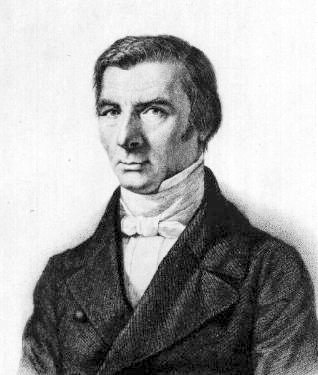
Frédéric Bastiat (1801–1850) was a French economist and member of France’s National Assembly. Bastiat is most famous for his 1850 pamphlet, The Law, but is also responsible for deriving the economic concept of ‘opportunity cost’.
Bastiat was a strong proponent of traditional economics and free markets, particularly those encouraged by Adam Smith. He is also responsible for influencing the Austrian School, a nineteenth and twentieth century school of economic thought that helped shape economists such as Ludwig Von Mises, Carl Menger and the 1974 Nobel winner, Friedrich Hayek, amongst others.
At age nine, Bastiat became an orphan and, as he grew older, tried out many trades including commerce and farming. After inheriting family land in 1825, the young man stopped working and dove into the world of economic thought. Although none of his views are considered original, his unique and informal writing style made his ideas easy to understand and relatable in the eyes of the common man.
The Frenchman was an outspoken critic of socialism and its advancement in French society during the nineteenth century. In The Law, Bastiat confronts ideas such as the execution of justice under the law, ‘lawful plunder,’ and the importance of liberty within a society.
Bastiat argues that the natural rights (life, liberty, and property) are the three basic requirements of life and that “the preservation of any one of them is completely dependent upon the preservation of the other two.” He goes on to warn readers of the harmful effects of lawful plunder, the idea that the law can be perverted and then weaponized to take private property from an individual without punishment or just compensation.
Bastiat’s other notable works include his 1848 essay, The Parable of the Broken Window, in which he first explains the concept of opportunity cost (an unforeseen cost taking place during the process of fixing the window) and the satirical “Candlemakers’ Petition” located within Economic Sophisms (1845) where he writes of a fictional group of candlemakers that attempts to lobby in order to block out the Sun, their products’ main source of unfair competition.
Bastiat was elected to the French National Assembly in 1848 and 1849 where he continued to publicly push for free markets before dying of tuberculosis a year later at the young age of 49. Despite his short career, Bastiat’s works were highly successful at popularizing laissez-faire economics amongst the masses and much of his writing is still relevant today.
Years after Bastiat’s death, Austrian economist and Finance Minister of German-Austria, Joseph Schumpeter, heaped praise on Bastiat, describing him as “the most brilliant economic journalist who ever lived.”
Sources:
Wikipedia entry